Archive for the ‘Making Strategy Measurable’ Category

#46 Why You Can’t Measure Your Performance Outcomes…

One of the worst immeasurability problems with strategy is the excessive use of ‘weasely’ language. And you’ll know what I mean if your strategy is full of words like efficiency, productivity, sustainability, or even performance outcomes.

Wikipedia explains what weasel words are:

The expression weasel word derives from the egg-eating habits of weasels… An egg that a weasel has sucked will look intact to the casual observer, while actually being empty. Thus, words or claims that turn out to be empty upon analysis are known as “weasel words”. The expression first appeared in Stewart Chaplin’s short story ‘Stained Glass Political Platform’ (published in 1900 in The Century Magazine,… in which they were referred to as “words that suck the life out of the words next to them, just as a weasel sucks the egg and leaves the shell.” Theodore Roosevelt attributed the term to Dave Sewall, claiming that Sewall used the term in a private conversation in 1879…

Read the rest of this entry »

#37 The Third of Three Things I Don’t Like About The Balanced Scorecard (It’s not a measurement methodology)

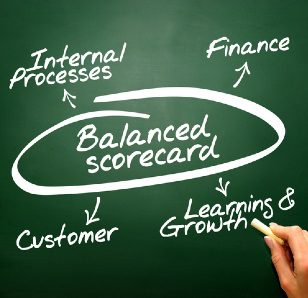
In the first part of this three part series, I posed the first challenge that I face with the Balanced Scorecard: it is hard to cascade meaningfully. And in part two was the second challenge: the Balanced Scorecard perspectives are too limiting.

The third thing I don’t like about it is this:

Read the rest of this entry »

#36 The Second of Three Things I Don’t Like About The Balanced Scorecard (the perspectives are too limiting)

In the first part of this three part series, I posed the first challenge that I face with the Balanced Scorecard: it is hard to cascade meaningfully.

The second thing I don’t like about it is this:

Read the rest of this entry »

#35 The First of Three Things I Don’t Like About The Balanced Scorecard (It’s hard to cascade meaningfully)

We have to applaud the Balanced Scorecard for the evolution it triggered in organisational performance measurement and strategy execution. But no model is without its limitations.

Certainly, on account of the Balanced Scorecard, we’re now seeing the measurement of non-financial results rather than just the financial, and we’re seeing strategies laid out in logical and cause-effect linked plans designed for execution rather than shelving.

Read the rest of this entry »

#31 Milestones Do Not Make Meaningful Performance Measures

“Complete business process review by June 2010″ and “Implement customer relationship management system by December 2009″ and “New workplace safety policy in place” are NOT performance measures, despite how often they appear as such in business and strategic plans and despite what many performance measure practitioners and experts might say.

They’re not performance measures because they fail a few essential tests of what makes a meaningful performance measure.

Read the rest of this entry »

#26 How to Isolate the Effect of Your Strategy and Test its True Impact

Don’t even try and work out how much time, effort, money and opportunity we waste by investing in business strategies that don’t truly work. Let’s instead talk about how exactly we can go about executing our strategies in a way that tests if they’re working, by isolating their effect on our desired performance results.

These effect-isolating methods have been around for donkey’s years, and they’re really quite simple too, but sadly under-used as part of an organisation’s or company’s strategy execution.

Read the rest of this entry »

#23 Five Steps to Find The Right Measures

How to find the right measures is the most asked question in the field of performance measurement. And it’s little wonder, because the more meaningful measures track outcomes which tend to be less tangible than the traditional things we’ve measured, like how many widgets we produced.

How do you translate results so intangible as employee morale or service quality or corporate image into solid, robust measures?

Read the rest of this entry »

#15 Activities, Outputs and Outcomes! Oh My!

As practitioners in the Land of Performance Measurement, we have our own version of Dorothy’s ‘Lions and tigers and bears’ in the Land of Oz.

We have activities, outputs and outcomes. Creatures that seem so much more frightening than they truly are, and mostly because we don’t really understand whether and how we are supposed to measure them.

Read the rest of this entry »

#6 Do Your Results And Measures Need A Divorce?

One of the most common reasons people hate their measures is not that the measure is bad. It’s that the measure is the wrong one for the result they’re trying to monitor.

A performance area you see this happening a lot is customer service performance. There are a raft of customer related measures around these days, each with its own promise of driving business growth. And don’t think that the research will lay it out clearly for you. Depending on what you read, you could be a believer in the Net Promoter Score’s “power on one” image, or a trigger-happy defender of the good old customer satisfaction index.

But we forget something vitally important, as we too eagerly dive into debates about which is the best measure.

Read the rest of this entry »

#5 Measuring What You “Need” Versus What You “Can”

There are all kinds of reasons why so many organisations have performance reports that are bursting at the seams with measures that mean nothing, impact nothing or lead to nothing. They’re measures that some will say “that’s interesting” and others will bark are “a waste of time”.

Often it’s because they are the measures that have always been reported, or some manager once wanted the measure for a project that ended five and a half years ago but it’s still being report just in case, or because something is better than the nothing that would exist if we left it up to decision makers to decide what should be in the reports.

Read the rest of this entry »